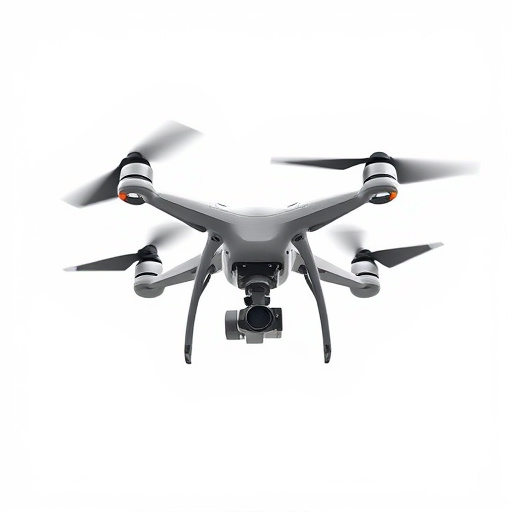
Drone inspections transform roofing by reaching inaccessible areas, providing detailed visual data, and enhancing safety. Benefits include reduced risks for inspectors, efficient coverage of large areas, and improved detection of subtle defects. High-resolution images reveal issues like missing shingles or moisture intrusion. Early detection allows proactive maintenance, minimizing costly roof failures. Adopting drone technology improves services, enhances customer satisfaction, and maintains a competitive edge in the market.
The roofing industry faces challenges when assessing hard-to-reach areas, impacting safety and efficiency. Traditional methods are often time-consuming and hazardous, especially for complex roof geometries. Herein lies the significance of drone inspections as a game-changer in the field. Drones offer a safe, comprehensive solution, capturing high-resolution imagery and data from elevated perspectives, particularly useful for assessing steep slopes or intricate rooflines. This technology revolutionizes roofing assessments, providing accurate measurements, identifying potential issues early, and ensuring structural integrity. By leveraging drone capabilities, professionals can streamline processes, reduce risks, and deliver superior quality in roof inspections.
- Drone Inspections: Unlocking Hard-to-Reach Roof Assessments
- Roofing Safety & Efficiency: The Power of Aerial Technology
Drone Inspections: Unlocking Hard-to-Reach Roof Assessments
Drone inspections have emerged as a game-changer in the field of roofing, offering unprecedented access to hard-to-reach areas that were previously challenging or even impossible to assess with traditional methods. This technology enables comprehensive roof evaluations by capturing detailed visual data and high-resolution images from aerial perspectives, providing a fresh and valuable insight into roofing conditions. With their ability to navigate tight spaces, overhangs, and complex geometries, drones unlock a new level of precision and efficiency in roof inspections.
One of the key benefits is the reduction in safety risks for inspectors. Climbing onto rooftops, especially those with steep slopes or inadequate structures, can be hazardous. Drones mitigate these dangers, ensuring inspector safety while delivering thorough assessments. For instance, a recent study by the National Association of Tower and Signal Companies (NATSC) revealed that drone inspections can reduce the risk of occupational accidents by up to 80% compared to traditional rooftop assessments. Moreover, drones can cover large areas in significantly less time, making them highly efficient for both residential and commercial roofing projects.
Roofing professionals can leverage drone data to make informed decisions, detect subtle defects, and plan repairs or replacements accurately. High-resolution images can pinpoint missing shingles, flashing issues, or signs of moisture intrusion that might go unnoticed from ground level. For example, a drone inspection of a large industrial facility revealed extensive damage to the roofing system caused by bird nesting, which would have been challenging to detect without aerial imagery. This early detection allows for proactive maintenance, minimizing the risk of more severe and costly roof failures. By embracing drone inspections, roofing contractors can enhance their services, improve customer satisfaction, and stay ahead in a competitive market.
Roofing Safety & Efficiency: The Power of Aerial Technology
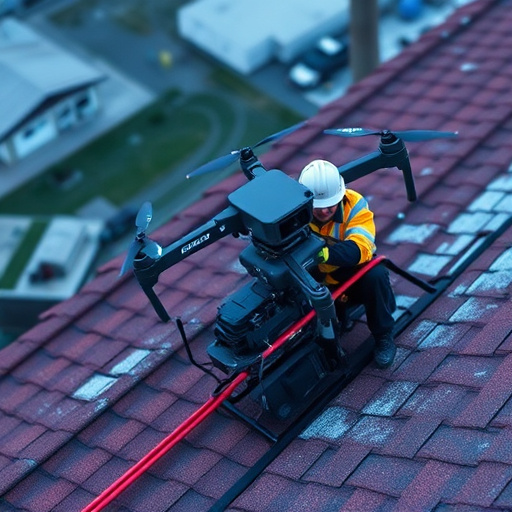
Drone inspections are transforming the way roofing professionals approach hard-to-reach areas, offering unprecedented safety and efficiency gains. Aerial technology provides a bird's-eye view of rooflines, enabling thorough assessments previously impossible with traditional methods. This is particularly beneficial for complex rooftops featuring steep slopes, intricate designs, or obstructions like chimneys and vents.
By deploying drones equipped with high-resolution cameras and thermal sensors, inspectors can capture detailed images and data from elevated perspectives. This technology allows for remote identification of issues such as missing shingles, damaged flashings, or signs of water intrusion without putting individuals at risk on precarious rooftops. For instance, a study by the International Association of Certifying Boards (IACB) found that drone inspections can detect roof defects with an accuracy rate of over 95%, surpassing the efficacy of manual methods.
Furthermore, drones enhance efficiency by streamlining the inspection process. They can cover large areas swiftly, generating comprehensive data sets in less time than traditional methods. This not only reduces labor costs but also expedites project timelines, allowing for faster repairs and reduced downtime for building occupants. For roofing contractors, adopting drone technology means staying competitive in a market where safety, speed, and accuracy are paramount.
Drone inspections have emerged as a game-changer in roofing assessments, particularly for hard-to-reach areas. By harnessing aerial technology, professionals can now enhance safety and efficiency in roof inspections, ensuring thorough evaluations of even the most intricate or elevated roofing structures. The article highlights the benefits of drone technology, demonstrating its ability to navigate labyrinthine rooftops with ease. This innovative approach not only revolutionizes roofing assessments but also opens doors to improved maintenance and prolonged roof lifespan. Moving forward, embracing drone inspections for regular roofing maintenance can be a strategic step towards a more robust and sustainable built environment, harnessing the power of this advanced technology in service of our natural need for safe and secure shelter.